Go farther. Stay longer. Come back.

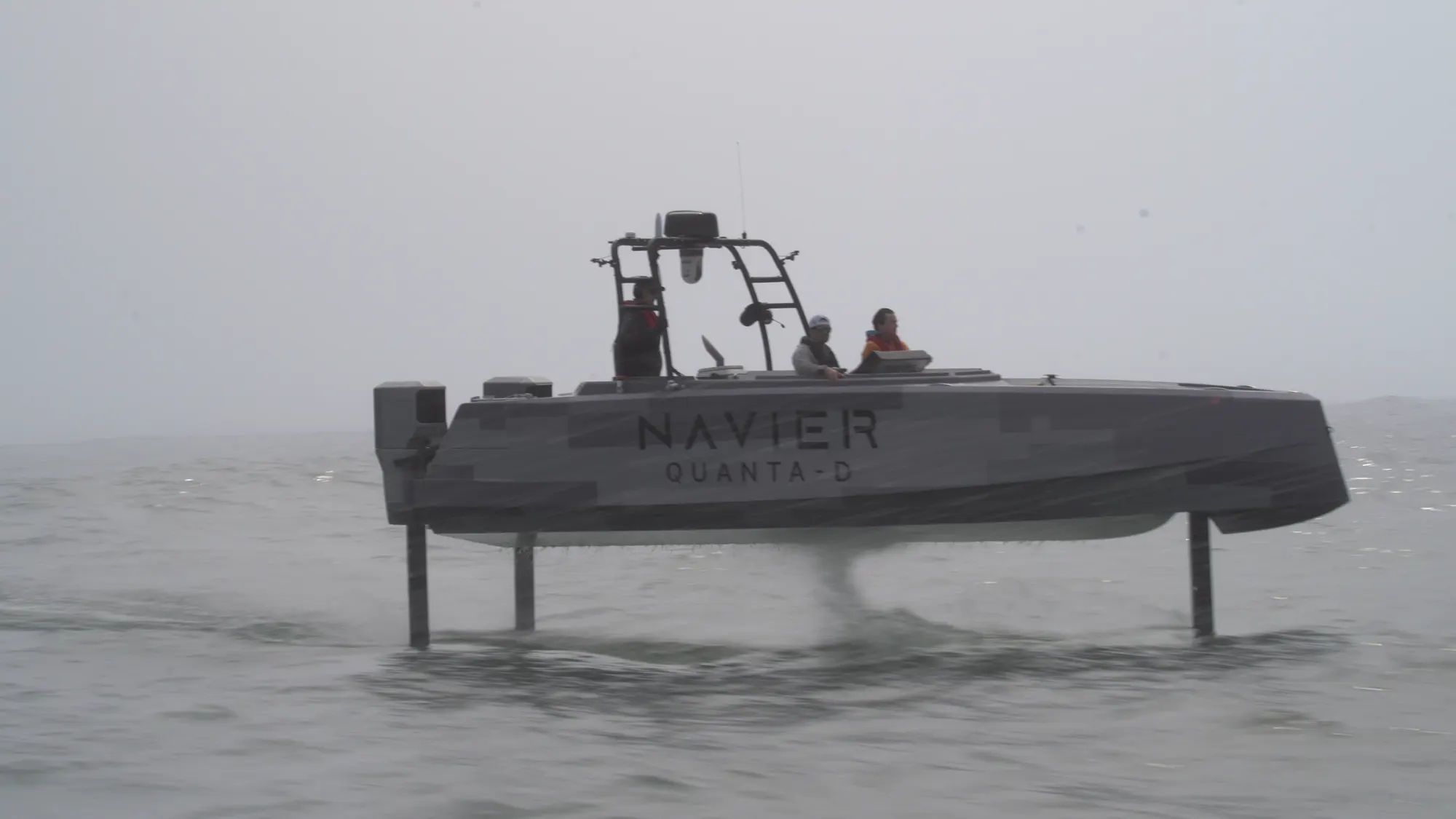
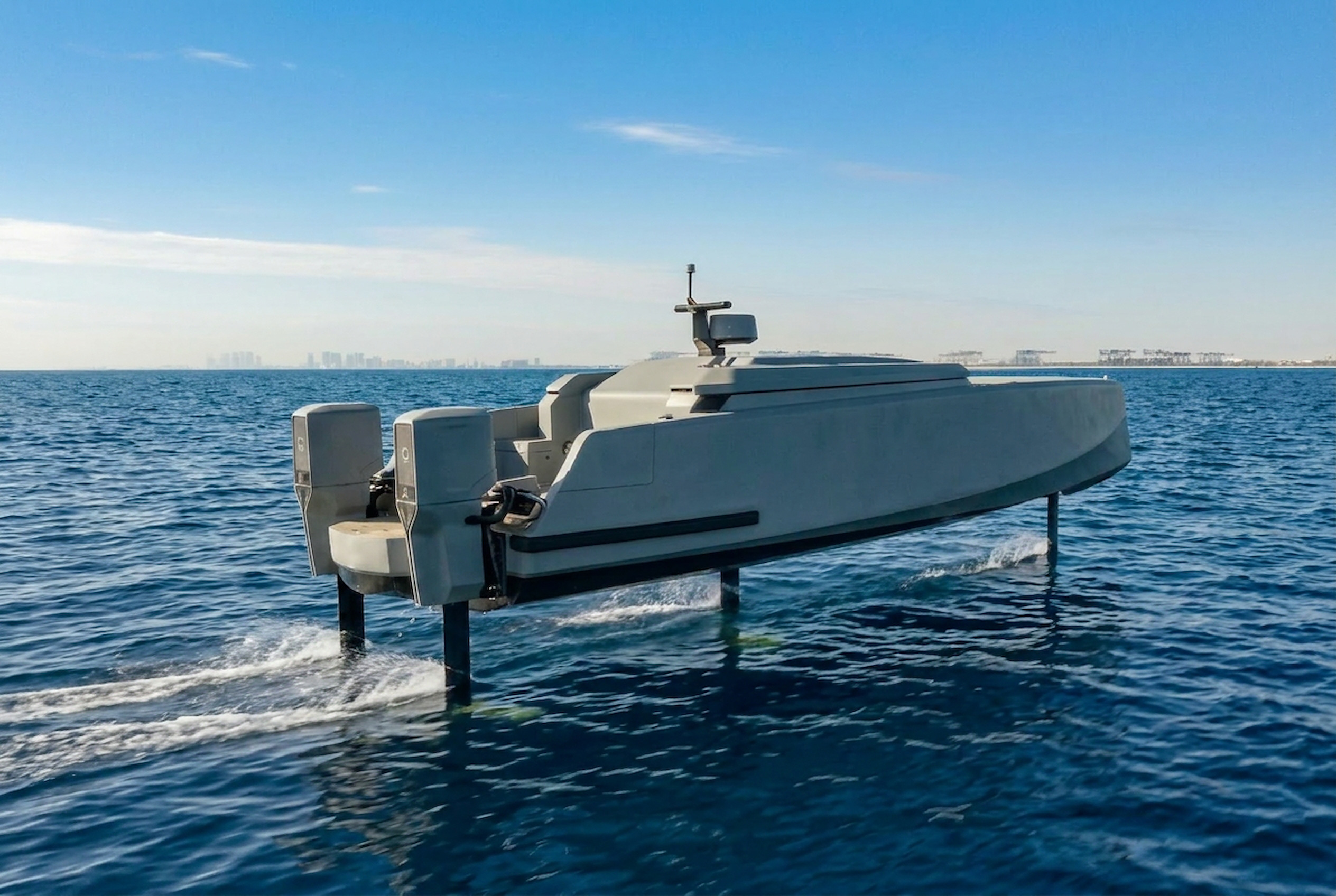
Quanta is a 30 ft hybrid-electric foiling vessel, crewed or uncrewed. It stays out 4 to 5× longer than a conventional boat its size at speed: 2,100 nautical miles uncrewed, 1,000 with a crew.

One vessel, many uses: transport, logistics, survey, patrol, and search and rescue. Navier builds the vessel. Customers and their integrators fit their own equipment.

How we work

We build the platform. Partners integrate.

Quanta is a commercial vessel, sold off the shelf with a set of options. The boat a government buys is the boat a resort or a port operator buys.

Off the shelf

One commercial platform, developed commercially, with standard options.

Your equipment, your integrator

Customers and their partners fit and integrate their own equipment. Navier does not integrate mission systems.

Open interfaces

We supply the power, data and mounting points, documented, so your integrator can work without redesigning the vessel.

Low-cost. Reusable.

Reusable beats attritable.

Most operations at sea are not one-time use. Quanta costs about the same to purchase as other vessels its size, yet has the range, endurance and robustness to go out again and again, crewed or uncrewed, much like a reusable rocket. A 4 to 5× mission range and a standard, modular platform with swappable mission payloads bring the cost of a mission down by as much as 30 to 50% (target).

Cheaper every run

70–80% less fuel per mile than a same-class monohull, and nobody aboard on uncrewed runs.

The equipment comes home

Equipment and data return with the vessel, to be refitted and sent out again.

No single point of failure

One job spread across several small vessels instead of one large ship. If one drops out, the rest carry on.

Affordable mass that comes home.

Steady in a seaway

A stable deck for equipment and crews.

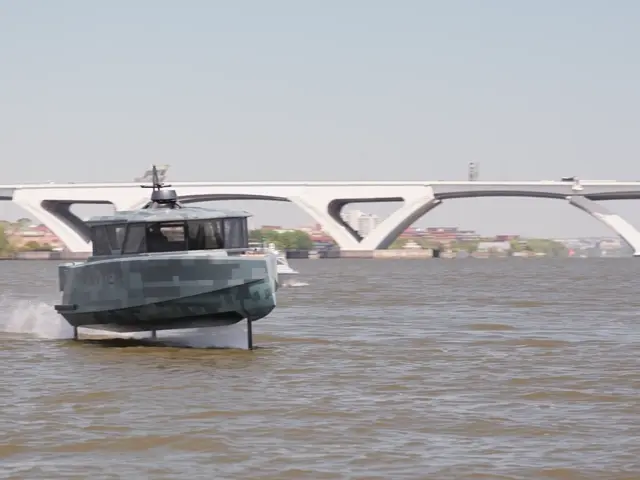
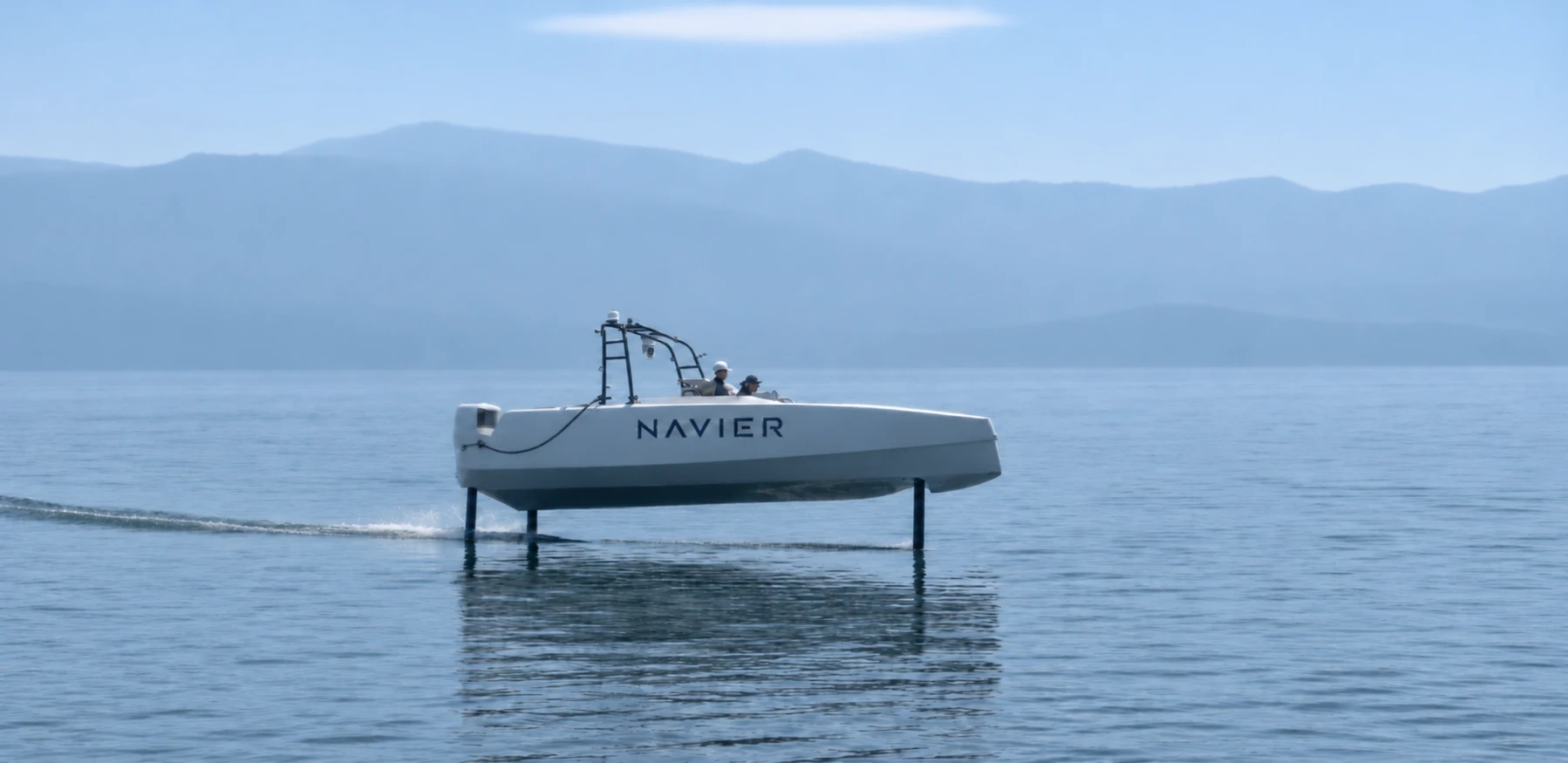
Planing boats slam. Quanta flies over the chop. Flight control trims the foils up to 50 times a second and holds the hull stable, so equipment keeps working and crews arrive ready.

94%

fewer slams than a 28-ft patrol RIB, Sea State 4 at 24–26 kn

Measured

2,200lb

payload

Rated

2,100 / 1,000nmi

range, uncrewed / crewed

Calculated

Built for reliabilityRedundant battery lanes with auto crossover · flight control on five U.S. Navy vessels · 10,000+ hours

“A boat that can’t hold its sensors steady is, for that mission, useless.”Arena Magazine, May 2026

Open architecture

Open by design. Easy to modify.

Quanta is built as a platform. Power, data and mounting points are standard and documented, so customers and their integrators can fit their own equipment without redesigning the vessel.

Fit what you need

2,200 lb in a 6 × 4 ft bay, a 24U equipment rack and up to 100 kW of power.

Layer in redundancy

Battery lanes and flight computers are redundant today. Add more wherever the job needs it.

Your software on top

Navier runs the vessel. Your systems run the job.

Specifications

Quanta at a glance.

30 ft hybrid-electric foiling vessel

Crewed or uncrewed.

Top speed

35 kn today, software-limited · V2 production vessel: 40 kn cruise, take-off about 20 to 22 kn

Target

Payload power

Up to 100 kW available for customer equipment

Option

Electrical

400 V bus on Quanta · 400 to 800 V across the platform

Flight control

Redundant flight control computers

Range

2,100 nmi uncrewed, before reserve · 1,000 nmi crewed

Calculated

Endurance

Over 100 hours of continuous flight, uncrewed

Calculated

Sea state

Foilborne at 24–26 kn in Sea State 4: 73% less vertical acceleration, 94% fewer slams than a 28-ft RIB

Measured

Rough water

Foiling through Sea State 4, hull-borne through Sea State 6

Design intent

Efficiency

3–5× the fuel economy of same-class monohulls at 22 kn, hybrid mode

Measured

Payload

2,200 lb rated · 6 × 4 ft modular bay · crew of 8, or uncrewed · 24U equipment rack

Deployment

Foils retract to fit a 40-ft open-top container · trailer, cargo aircraft or ship · 1.5 ft draft

Design intent
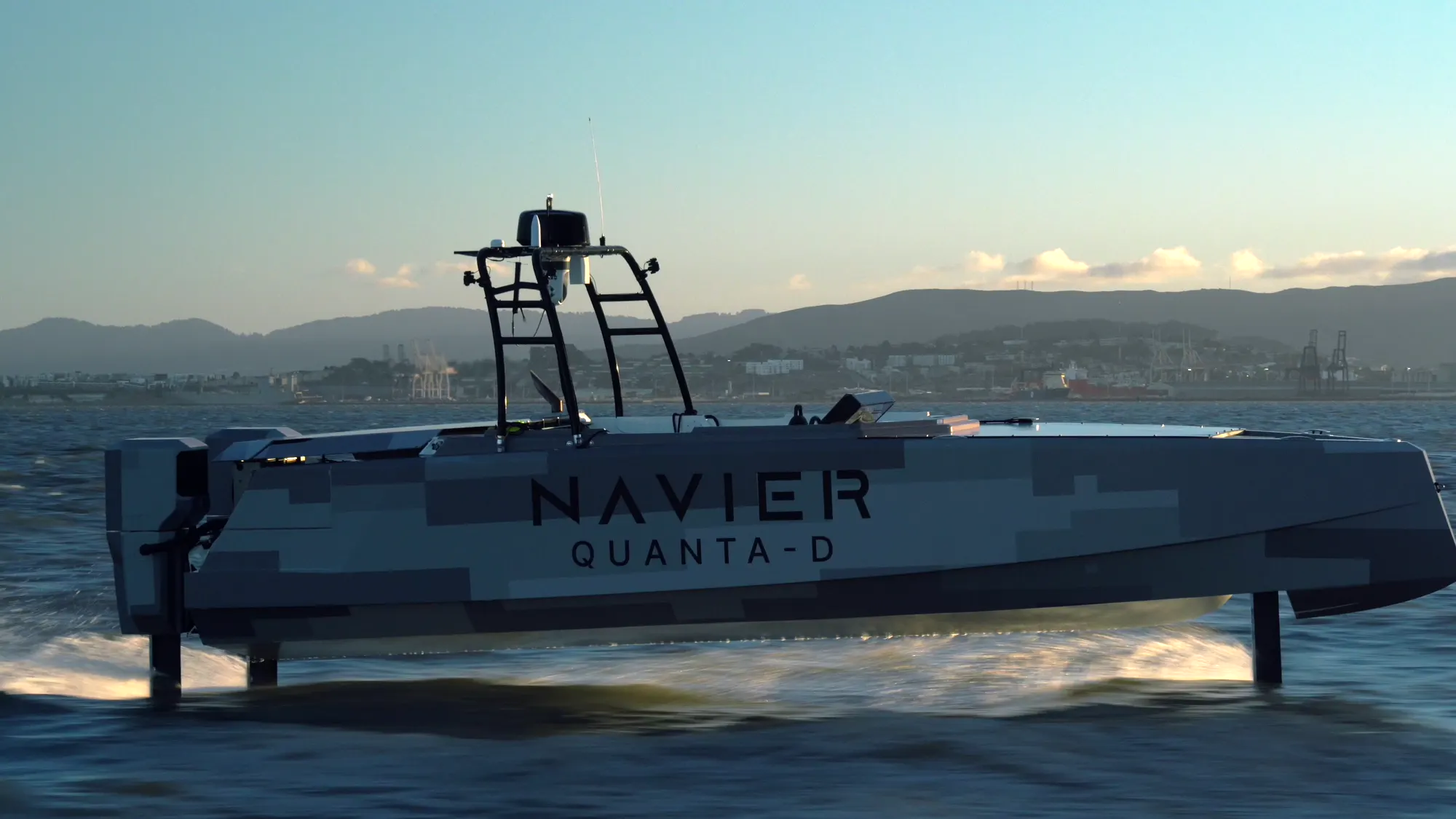
Quanta in profile, foils deployed

Uses

One hull. Many uses.

The equipment and the trip change. The hull, the foils and Navier flight control stay the same. Pick a use to see what it asks of a boat, and what Navier brings to it.

Quanta loitering on battery with its sensor mast up, SOCOM TE 26-3
SOCOM TE 26-3 · Aug 2026

Days on station. A mast that stays stable.

Quanta transits foilborne at 22 knots, then loiters on battery with the generator off and its radar and EO/IR up. A stable hull keeps the picture steady where a planing boat would be pitching.

100+ hrsof continuous flightCalculated

Why Navier

  • Persistence. 2,100 nmi on one tank: out, on station for days, and back without refuelling.
  • A steadier picture. 73% less vertical acceleration than a 28-ft patrol RIB in Sea State 4.
  • Standard sensors. The same mast we fit to every Navier vessel, commercial or government: radar, 360° cameras, a thermal camera and machine-vision detection, with room on the bus for the customer’s own equipment.
EquipmentStandard sensor mast
CrewCrewed or uncrewed
TripTransit, then loiter
StatusDemonstrated
Quanta foiling through rough water

Thirteen vessels hold ten stations, around the clock.

Hold a line of vessels across a strait, a harbor approach or a fishery boundary. Long time on station means fewer boats in transit.

13 vs 25+Quanta vs. conventional craft, 10 stationsCalculated

Why Navier

  • Fewer hulls for the same line. Long time on station means fewer boats in transit.
  • No single point of failure. Lose a hull and the line holds while a spare flies out.
  • Networked. Satellite and line-of-sight links, with the customer’s own control software on top.
EquipmentCustomer sensors
CrewUncrewed
TripHold station, rotate home
StatusEnabled
Quanta in profile, foils deployed

108 kW continuous on a deck that stays stable.

Carry and power your own equipment far from shore. The 400 V bus supplies 108 kW continuous and 208 kW peak.

108 / 208 kWcontinuous / peak on the 400 V busRated

Why Navier

  • Proven at sea. The 400 V bus has powered customer equipment under way since May 2026.
  • Power for your equipment. Designed for power-hungry systems, continuous or peak.
  • Gets there on its own. 1,400 nmi on one tank.
EquipmentCustomer equipment
CrewCrewed or uncrewed
TripTransit, operate, return
StatusDemonstrated
Quanta foilborne with an open cargo deck, running a logistics resupply mission

2,200 lb to a beach with no pier.

Run resupply to dispersed outposts and island bases. Quanta carries 2,200 lb in a 6 × 4 ft bay, retracts its foils to 1.5 ft of draft and noses onto the beach. With a full load it can run 500 nautical miles out and come back on one tank.

500 nmradius with 2,200 lb aboardCalculated

Why Navier

  • The load arrives intact. Flying above the chop spares cargo the pounding of a planing hull.
  • Fewer refuels where fuel is scarce. 70–80% less fuel per mile than a same-class monohull.
  • Lands where ships cannot. 1.5 ft of draft with the foils up.
Equipment2,200 lb in a 6 × 4 ft bay
CrewCrewed or uncrewed
TripPoint to point, onto the beach
StatusEnabled
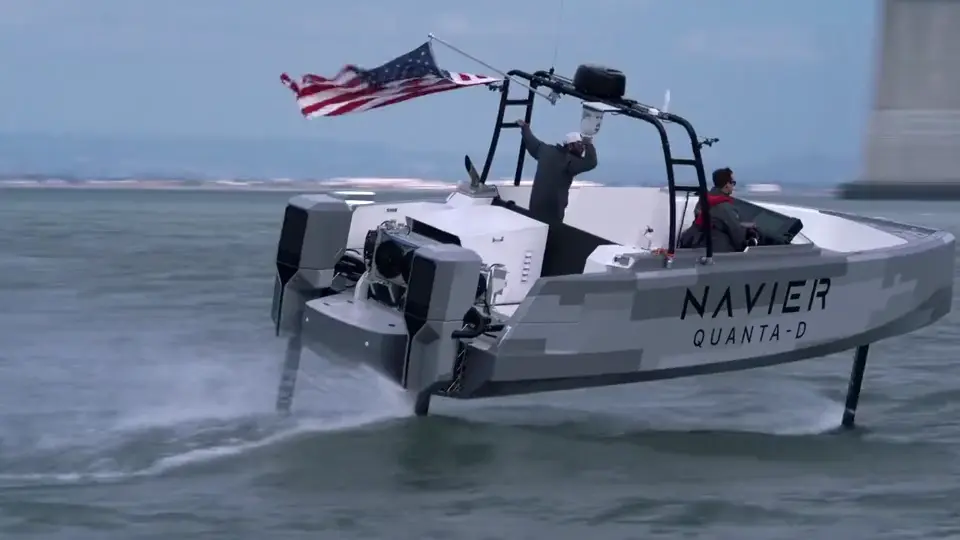
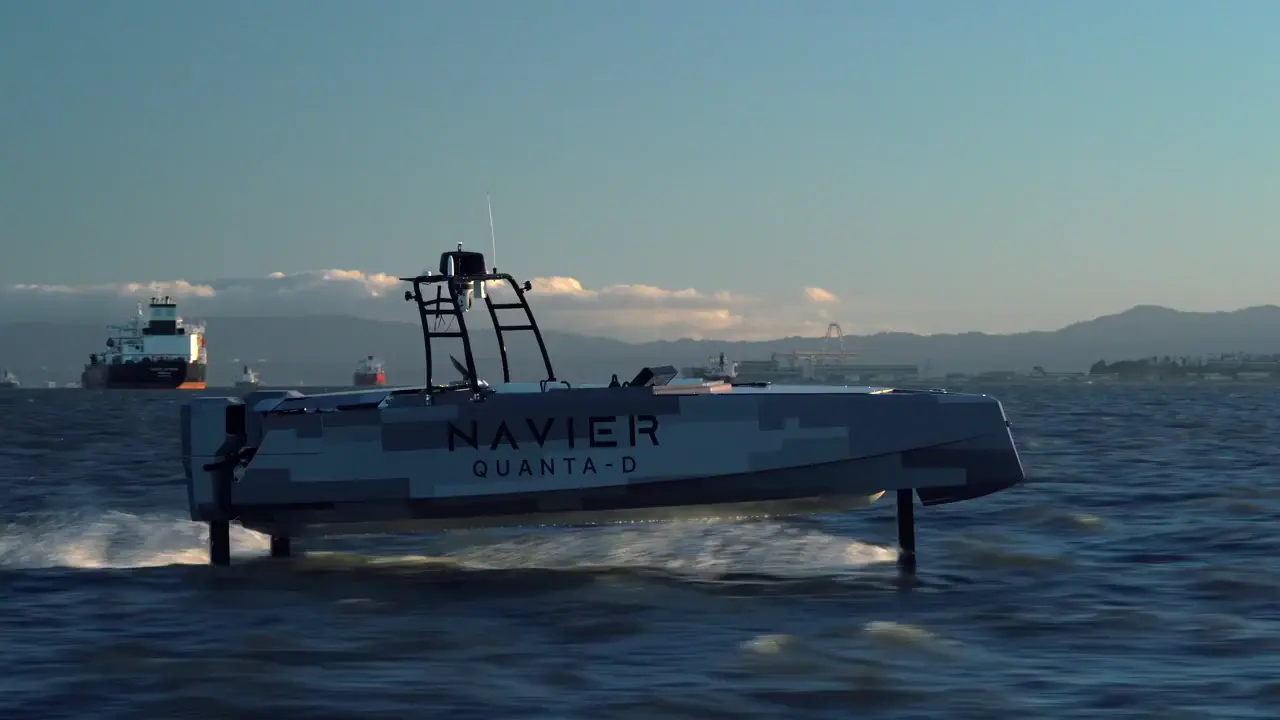
Quanta underway on San Francisco Bay, flag flying

Several stable vessels around a ship, a harbor or an offshore site.

Watch over a ship, a harbor or offshore infrastructure with several small, fast vessels instead of one.

35 kntop speed today · 40 kn cruise in design

Why Navier

  • Distributed, not single. Many vessels and no single point of failure.
  • Dash when it counts. 35 knots today; the next variant is designed to cruise at 40.
  • Day and night. The same hull runs crewed by day and uncrewed by night.
EquipmentCustomer sensors
CrewCrewed or uncrewed
TripPatrol
StatusEnabled
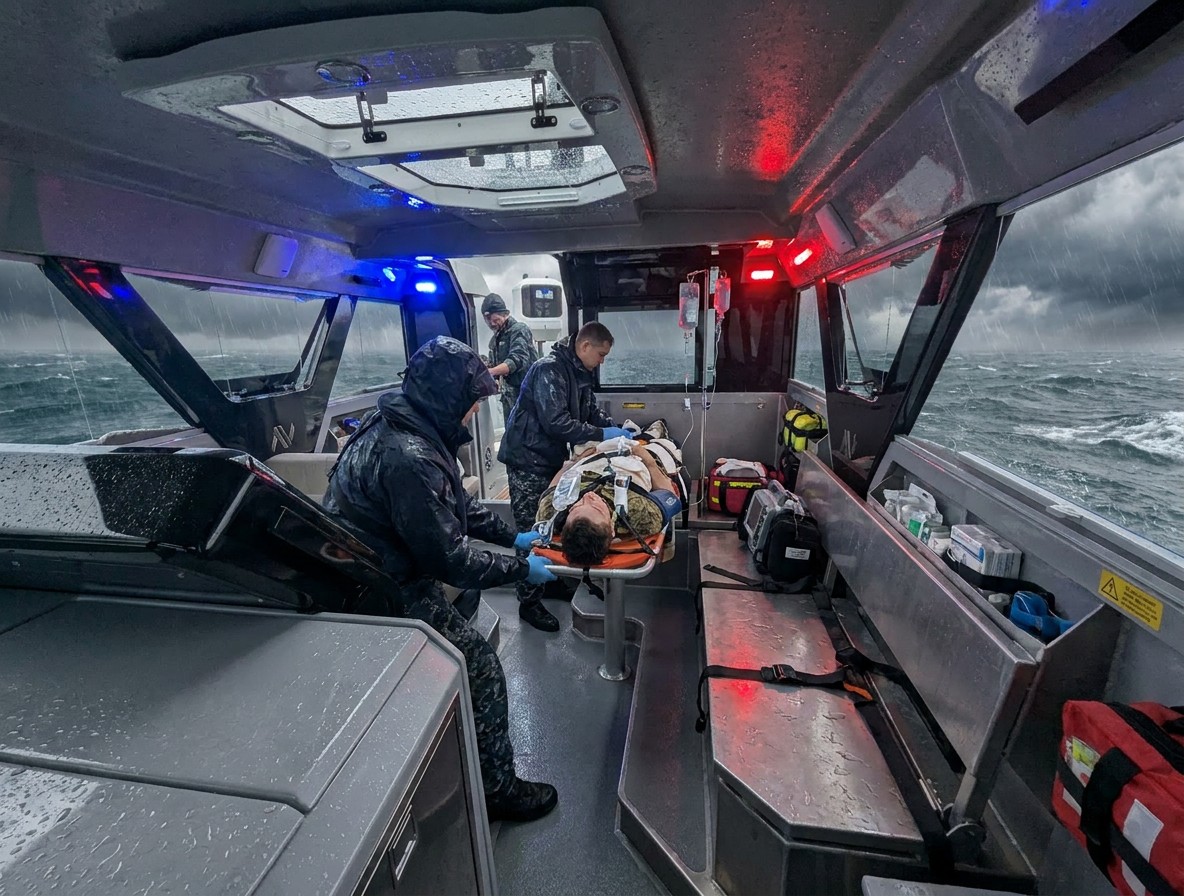
Rendering of medics treating a casualty on a litter in a Navier vessel's cabin at night in rough weather
Rendering

Fast to the scene. No pounding on the way back.

Move a team of up to eight through Sea State 4, or carry a casualty on a litter in the payload bay. Foiling cuts out most of the slamming that injures backs and worsens wounds.

94%fewer slams than a 28-ft patrol RIB, Sea State 4Measured

Why Navier

  • The team arrives ready to work. 73% less vertical acceleration than a patrol RIB.
  • A litter in the bay. Trialled on the N30 in 2026.
  • Beach pick-up. 1.5 ft of draft with the foils retracted.
EquipmentUp to eight aboard, or a litter
CrewCrewed
TripDash, recover, return
StatusDemonstrated
1 / 6

2026, on the water

A year of sea time.

Navier at Sea-Air-Space
Apr

Sea-Air-Space

A Navier vessel foilborne on a calm lake during the SOCOM TE 26-3 evaluation, mountains in the background
Aug

SOCOM TE 26-3 special-operations evaluation

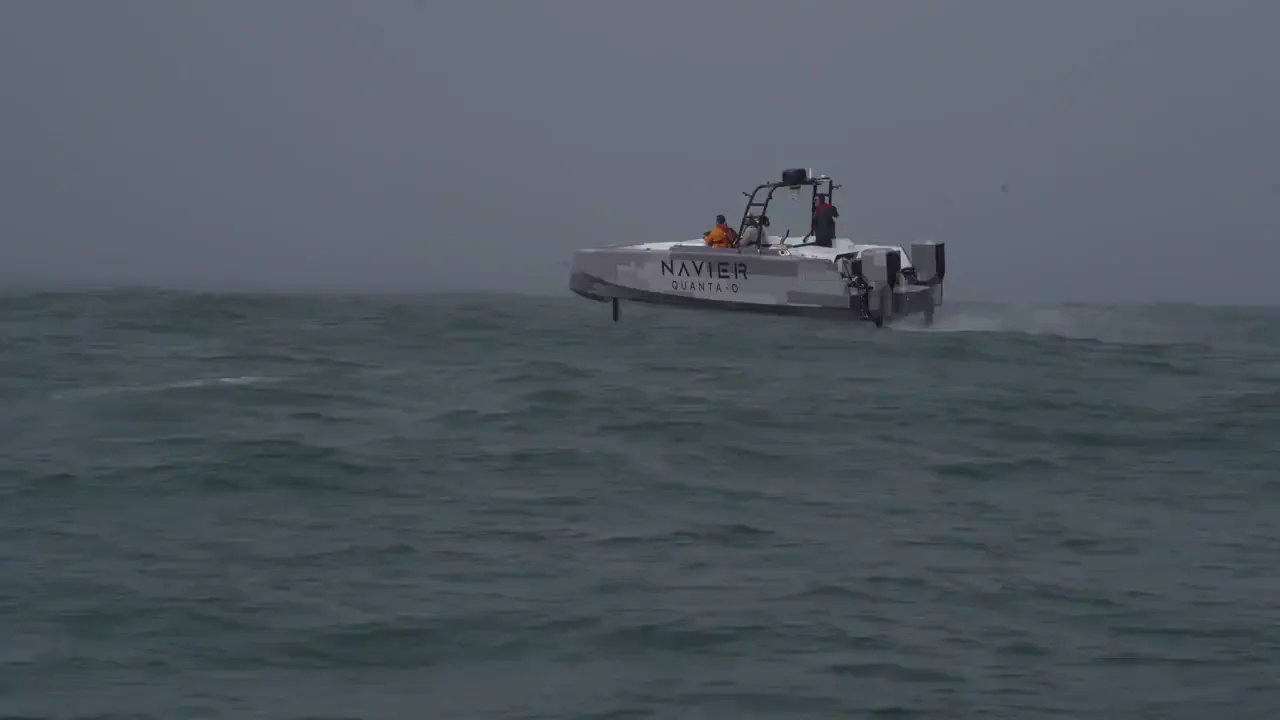
Quanta foiling through rough water in Sea State 4
Sep

Sea State 4 trial, side by side with a 28-ft patrol RIB

Quanta underway on San Francisco Bay, flag flying
Oct

Fleet Week San Francisco

Quanta foiling uncrewed on San Francisco Bay during its first autonomy trials
Oct

Quanta's first uncrewed sea trials

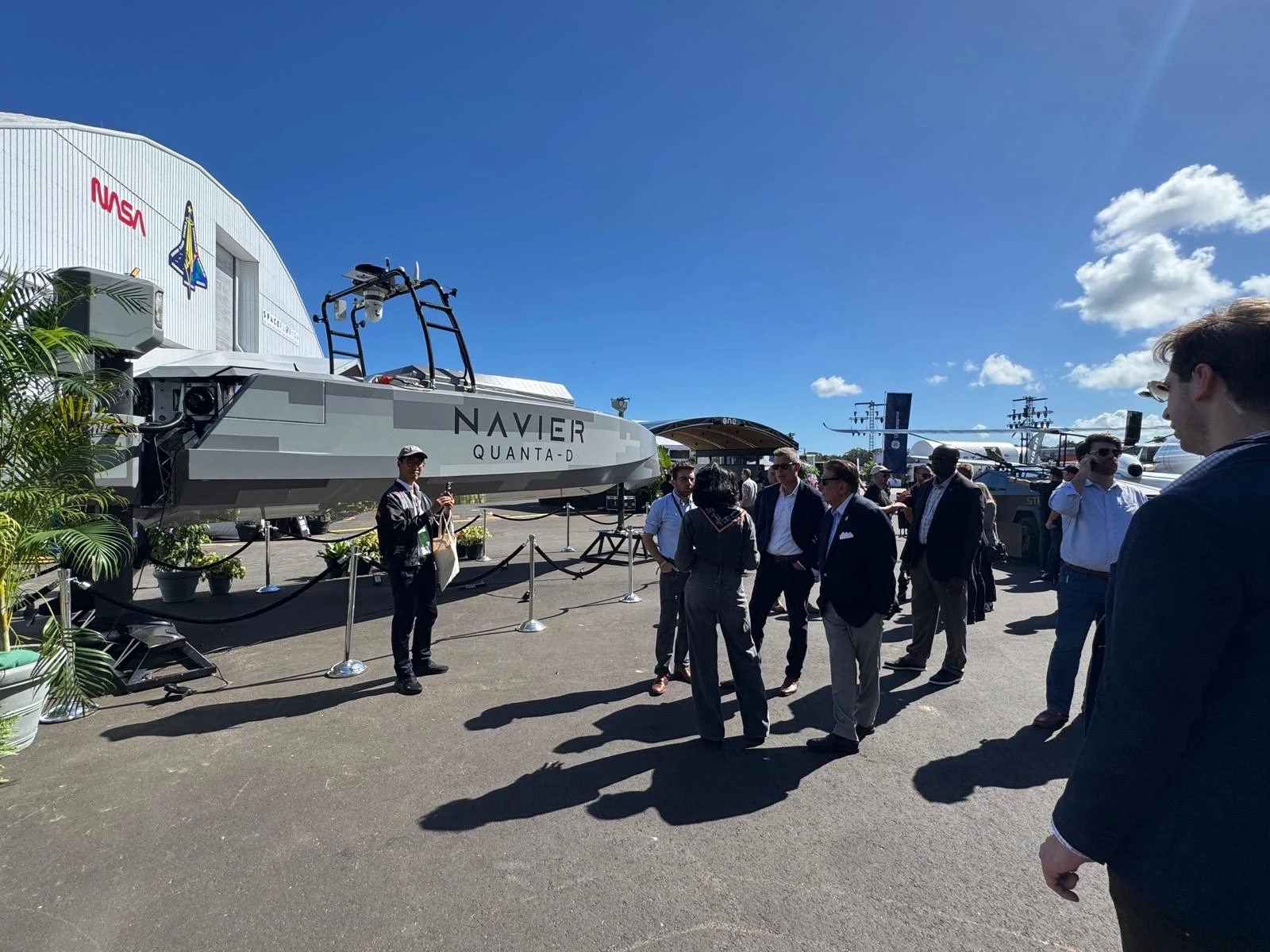
Quanta-D on display at UP.Summit, Cape Canaveral, with a NASA hangar in the background
Nov

UP.Summit, Cape Canaveral

Evaluate it against your work.

Come to San Francisco Bay for a demonstration. Review the trial data, then tell us what you need to carry. We will connect you with an integration partner.

Request a demonstration → Request the spec sheet

To learn more about government applications, contact us.