Every Navier vessel is built from the same core: a new naval architecture, electric and hybrid propulsion, active flight control and the software that runs the fleet. Configured per mission, built in volume.
Over the next 10 years, vessels will run themselves. A vessel with no one aboard has to look after itself at sea, so we design autonomy into the core, rather than retrofitting it onto a boat.
Stays at sea
Remote diagnostics, embedded systems and sensors watch the vessel's health: the groundwork for running without a crew.
Decides on board
Flight control and autonomy run on the hull, not in the cloud. The link supervises; it doesn't steer.
Configured in days
Modular hulls and our design software turn mission configuration from months into days.
Foiling & flight control
Flies like an aircraft.
● Foil strut at speed · N30
Hull clear of the water
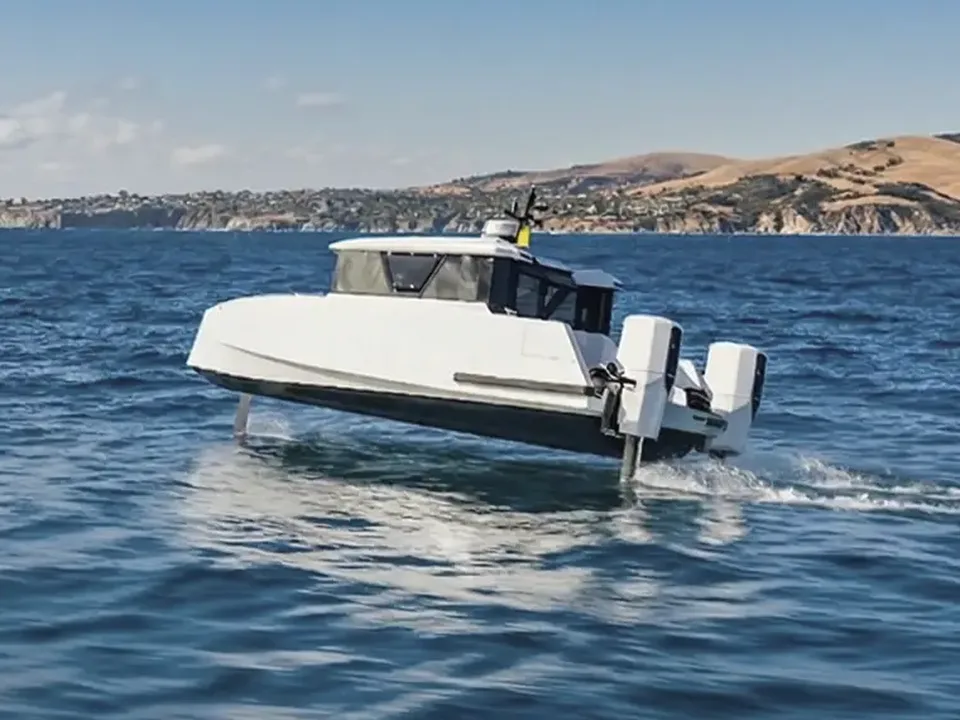
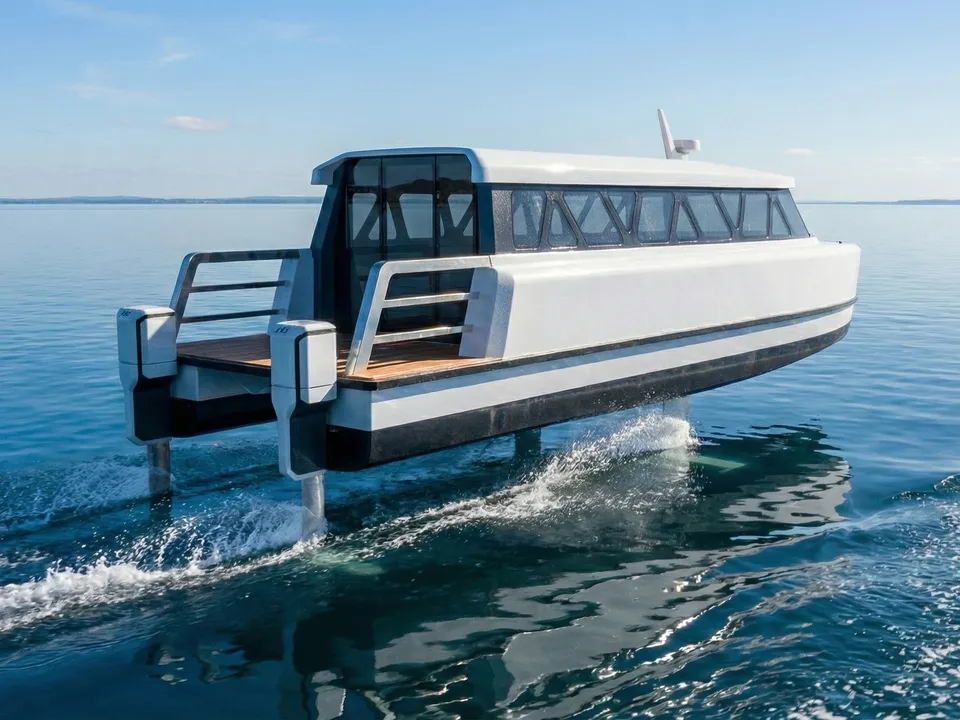
The foils lift the hull clear of the water. Sensors read every wave; the flight computer moves each flap up to 50 times a second to keep the deck stable. The helm drives it like a boat. The computer flies it.
Corrections / sec50
Height hold · logged±2 cm
Pitch & roll · nominal<1°
Drag vs planing hull4× less
Hull forms
Multiple hulls. One platform.
Monohull · 30 ft
N30, Quanta. Agile, efficient, fast to build.
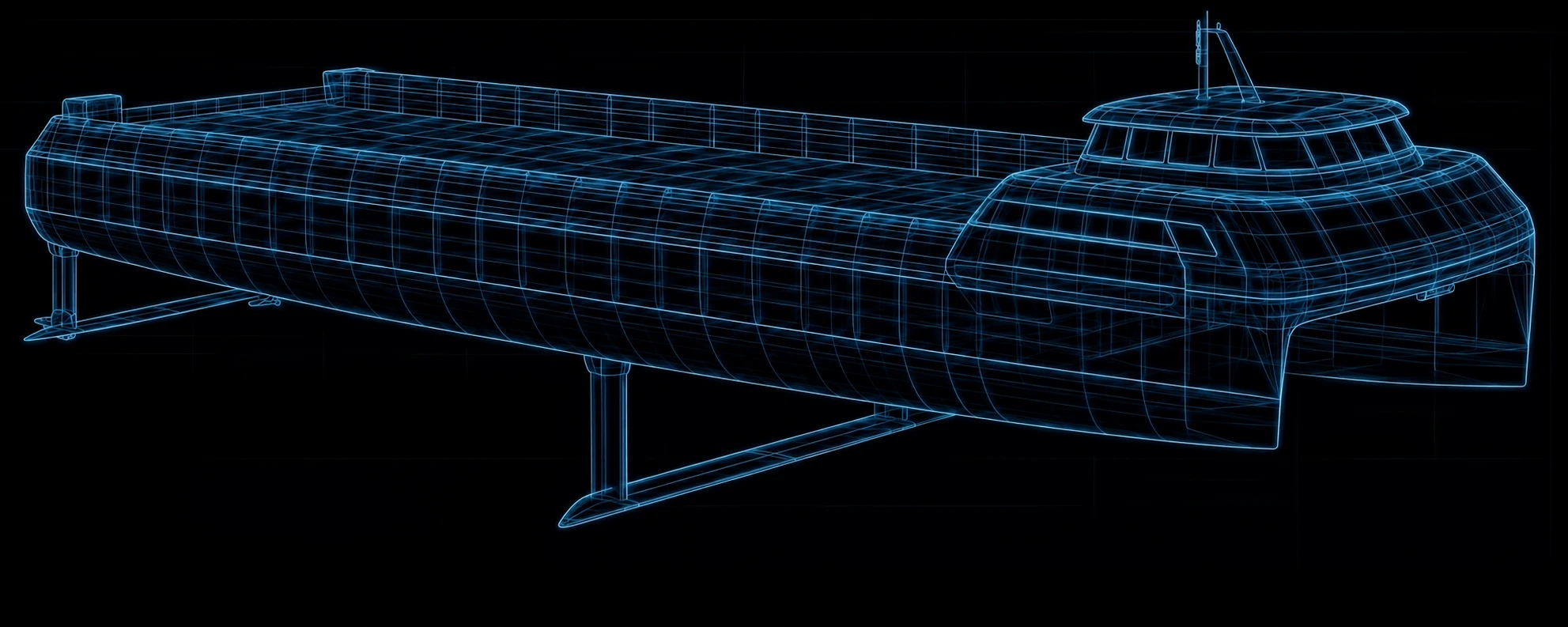
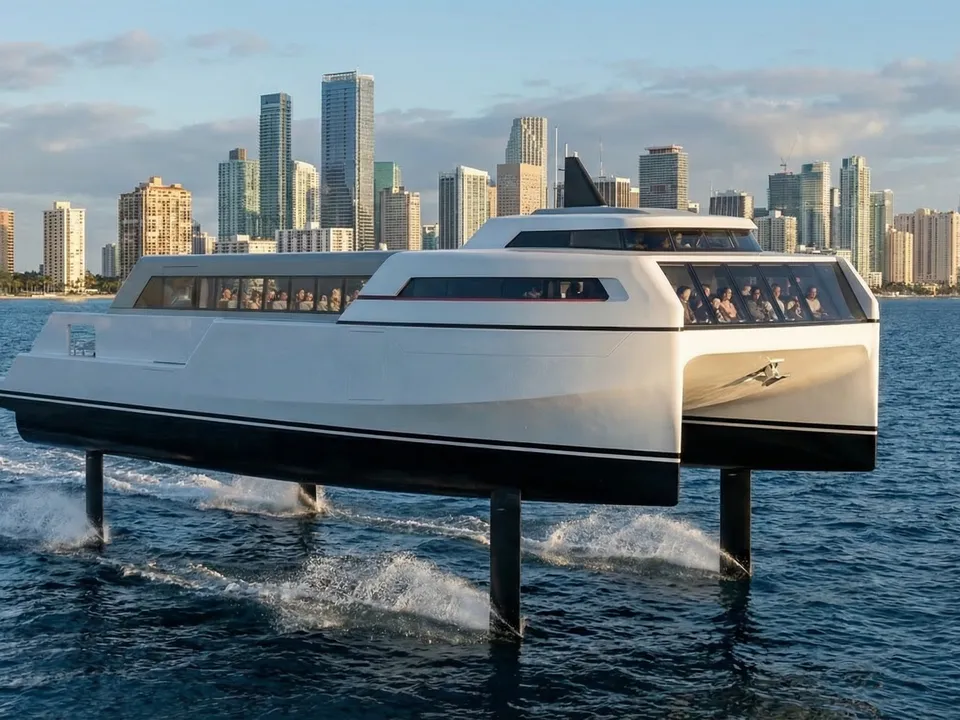
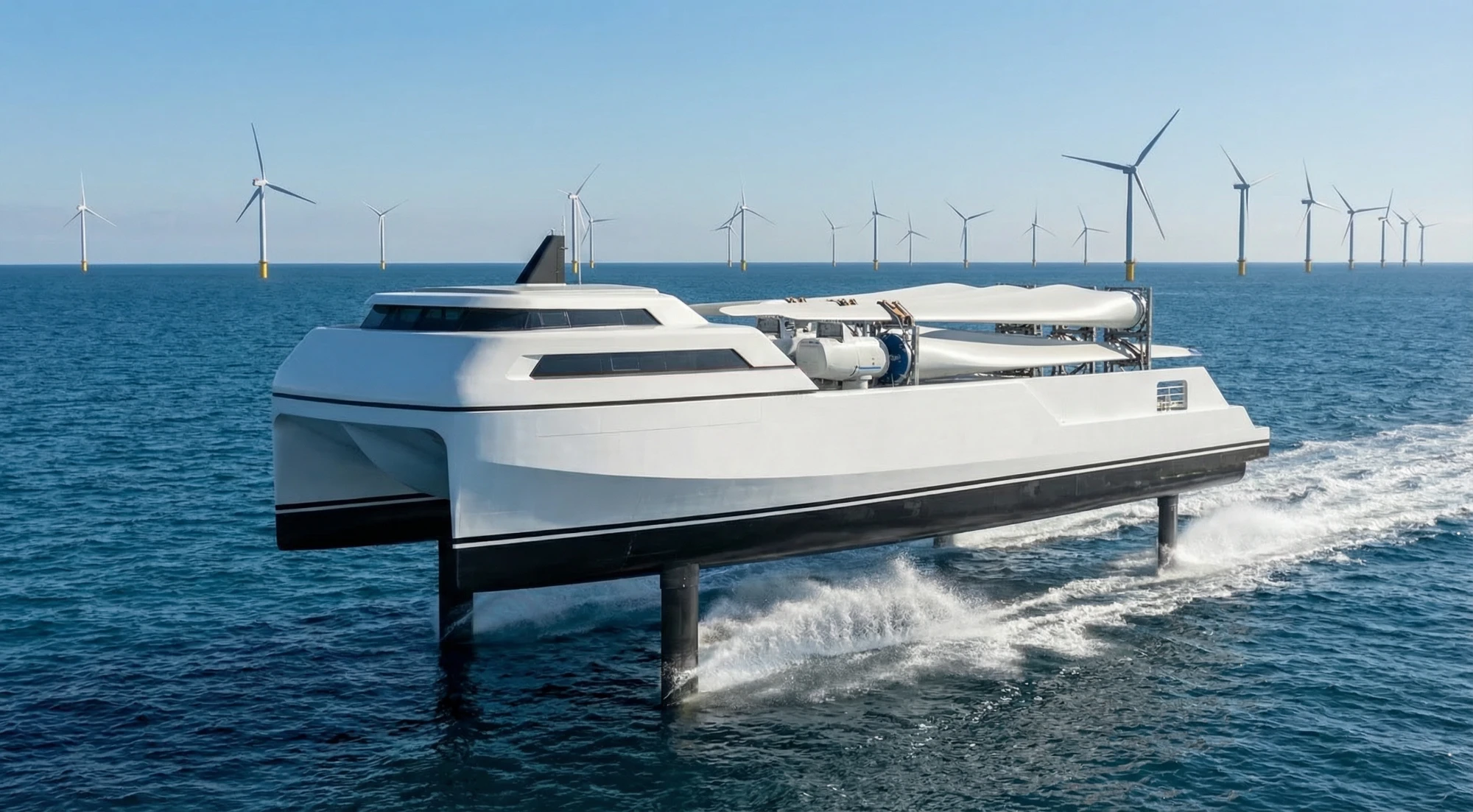
Catamaran · 80 ft
Valkyrie. Deck space and payload for logistics.
Advanced control
Steer anywhere.
Twin electric pods, each independently steerable with its own motor controller. No shafts, no rudders, no engine room. Slide sideways, spin in place, hold station in wind. Two drives means a redundant drive — near-silent on battery.
Power · Pioneer II / Quanta2 × 90 kW
Top speed · Pioneer II30 kn
Electric loiterNear-silent
●Side-step off the dock
Pioneer II · top view · sped up
Redundant architecture
Smart electrical design
Redundant, EV-grade power at sea.
400–800 V
208 kW peak bus · N30/Quanta
35 min
DC fast charge · 10–80%
10×
Less energy than a conventional boat
Hybrid
Available across the platform
Perception
Sees above the water and below it.
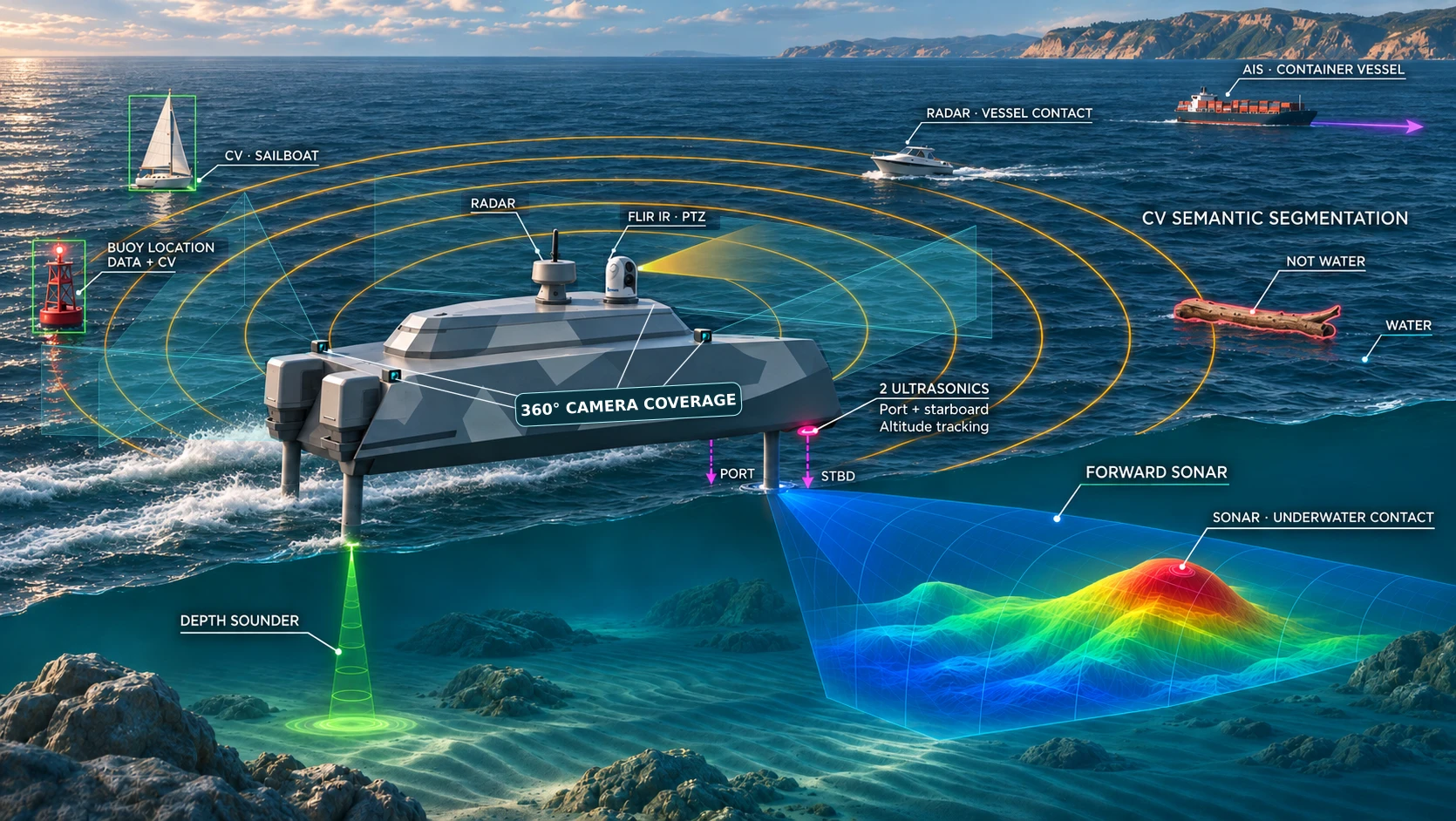
● Full-perimeter sensor coverage
Composite rendering
1 Forward sonar ships on production vessels
Four cameras give the hull full 360° coverage on the surface. Radar and AIS pick up vessel contacts at range; onboard computer vision classifies water from everything that isn't. Below the waterline, forward sonar and a depth sounder map what's ahead and underneath, while twin ultrasonics track height off the surface.
Cameras · FOV each4 · 170°
Altitude tracking2 ultrasonics
Underwater sensingSonar + depth1
Contact fusionRadar · AIS · CV
Quanta
Long-range hybrid
30 ft hybrid-electric · optionally crewed
2,100 nmiuncrewed
Uncrewed, on one tank, at 22 knots: about five times the range of a same-class monohull, on 70–80% less fuel per mile. 1,000 nmi with a crew. A Quanta ocean mission is planned for 2027.
~5×
Range vs same-class
−70–80%
Fuel per mile
Rough water. Stable deck.
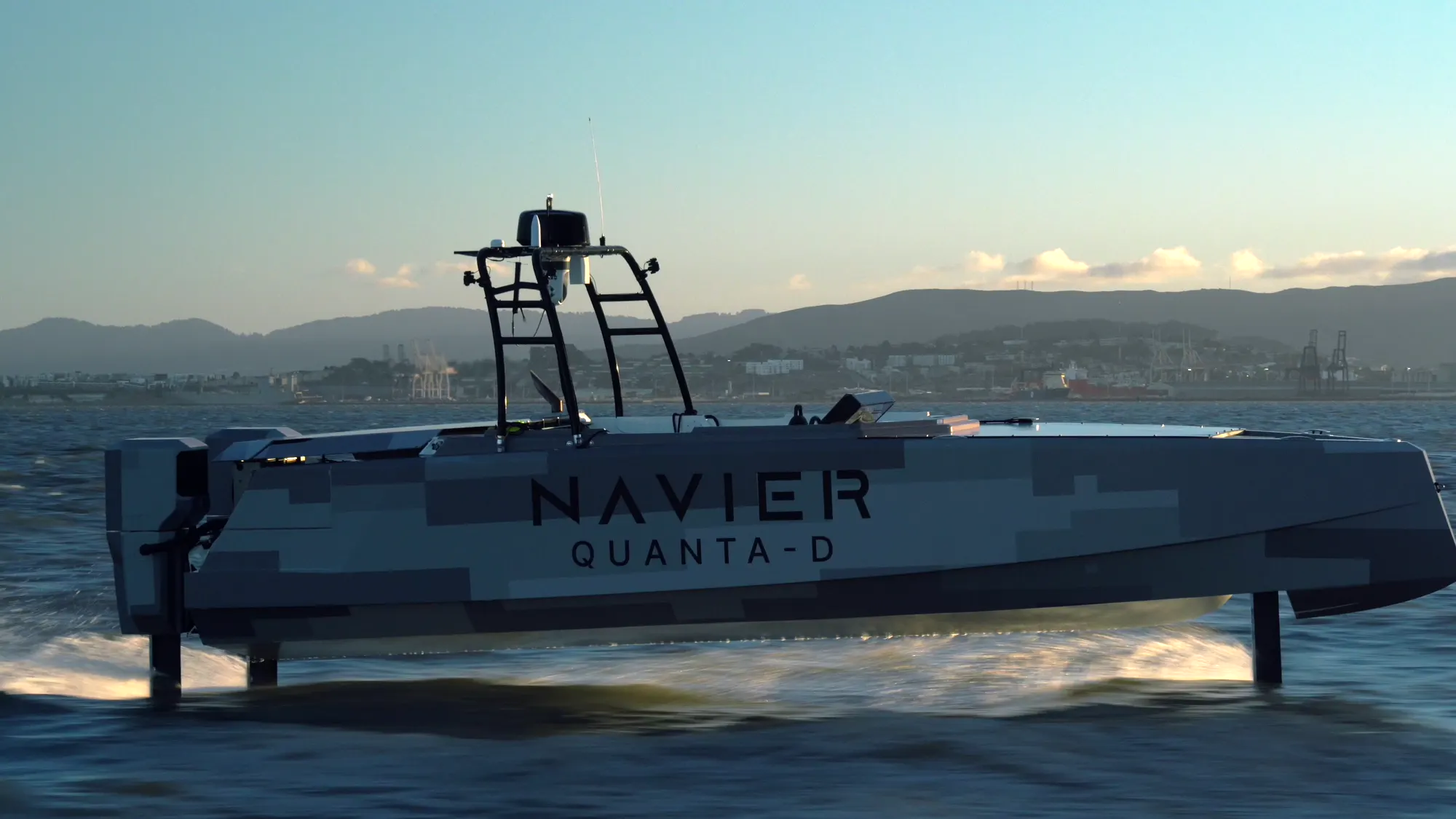
Quanta · foilborne in rough seas
● Quanta · foilborne
Sea State 4 · 24–26 kn
Ride height · held
94% fewer slams vs patrol RIB
Measured · Sea State 4 · 24–26 kn · side by side with a 28-ft patrol RIB
The boat to be on.
73%
Smoother
Less vertical acceleration — what the crew feels.
94%
Fewer slams
Impacts above 0.4 g — what injures backs and breaks sensors.
77%
Steadier
Lower pitch rate — what a camera or a payload needs.
35 kn
Today · software-limited
40 kn
Cruise option · different foil set
SS4
Foilborne · measured
2,200 lb
Payload
1.5 ft
Draft · beachable
5
Modes · stow, shallow, motor, half foil, full foil
Air
Transportable by cargo aircraft
Range calculated from measured efficiency at 22 kn, before reserve · Seakeeping: Navier benchmarking test, open ocean near SF Bay, 23 Sep 2026
One core, every vessel
GMVP
30 → 180 ft. One general platform.
The N30 proved the control core in real operations. The platform scales that core across every class — so each new hull inherits the software layer instead of starting over.
Mission layerPayloads · passengers · cargo
Software layerFlight control · autonomy
Platform layerHull · foils · powertrain
Scalable, swappable
The same core moves to a new hull class without a redesign — swap the platform layer, keep the software layer.
Complexity in layers
Each class builds on the same core, adding capability in layers instead of starting over. Customers can add more redundancy wherever the job needs it.
Modular communications
Comms plug in per mission — the customer's own systems — without touching the platform underneath.
Predictive, remote
Diagnostics and remote monitoring watch every hull and flag failures before they happen.
No single point of failure
Redundant end to end — power, propulsion, flight control and communications.
● Proven · TRL 9
N30
30 ft · electric 10,000+ hours
● Sea trials · TRL 7
Quanta
30 ft · hybrid · optionally crewed 2,100 nmi uncrewed at 22 kn
○ Design
N45 Explorer
45 ft · light ferry high-speed cargo
○ Design
N80 Valkyrie
80 ft · high-capacity ferry multi-container cargo
○ Concept
N180 Morpheus
180 ft · ocean ferry ship-scale sealift
Production · San Francisco Bay Area
Built and tested in the Bay Area.
Hulls, foils, pod drives and flight electronics, designed, assembled and tested here, so every lesson from the water goes straight back into the next hull.